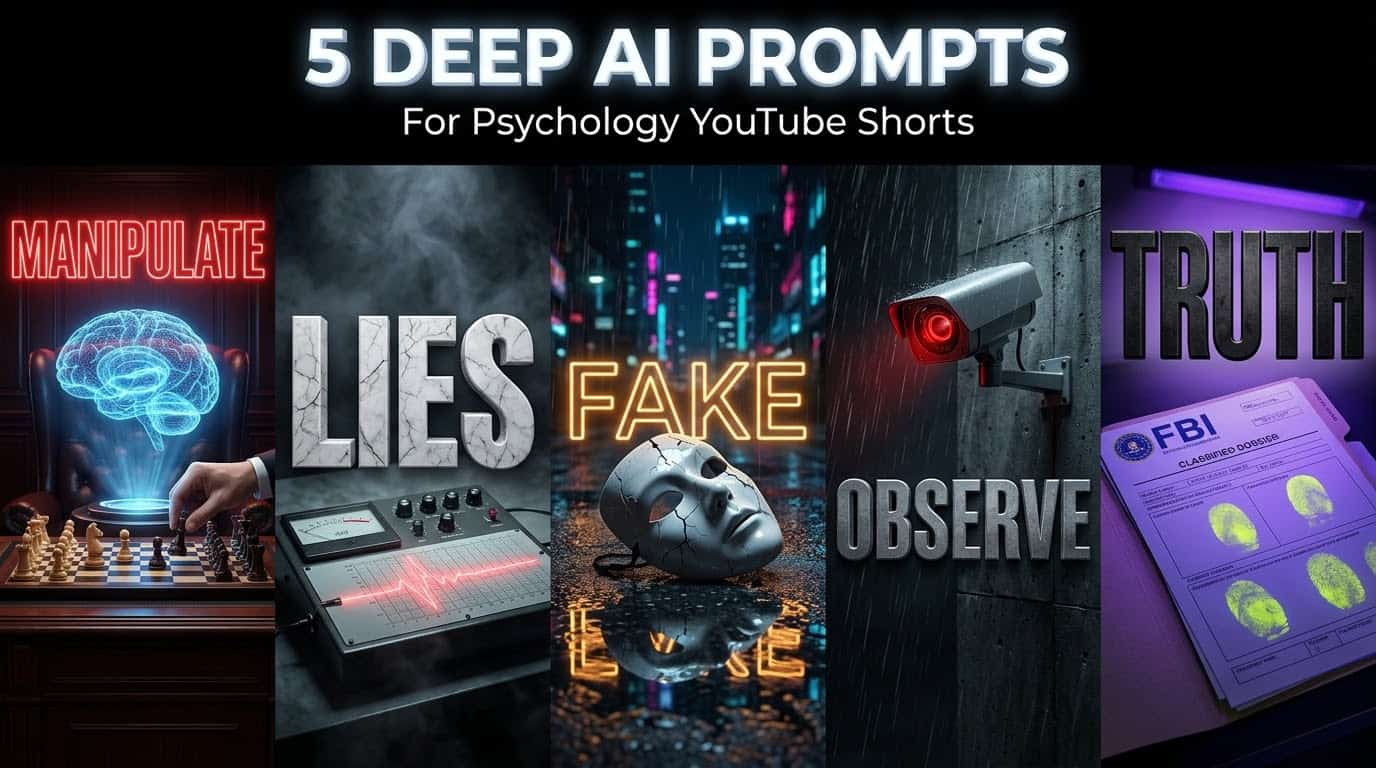
Quick Overview: Are you looking for the best AI prompts for psychology YouTube Shorts to build a high-retention faceless channel? Standard stock footage is often overused. Audiences engaging with behavioral psychology or deep facts expect high-end, mysterious 9:16 vertical art featuring bold 3D text hooks to help stop the scroll. In this guide, I am sharing five copy-paste AI background concepts with typography baked directly into the image. Over the past several months, I’ve experimented with different prompt structures, compared outputs across multiple image generators, and noted which styles consistently produced cleaner results. These examples are intended as creative inspiration and should be adapted to fit your own content style.
Short-form content is highly competitive right now. The deep human behavior and mindset niches pull in massive audiences across North America and other Tier-1 regions. This category is often associated with relatively higher advertising rates than many standard entertainment topics, although actual earnings vary widely. Because the demand is immense, fighting for that first second of viewer attention is ruthless.
You can spend hours writing an analytical script about influence or persuasion. You can pair it with an excellent AI voice clone. But the opening frame can heavily influence whether viewers continue watching. If your video starts with a bright, generic clip of a random office, many people will just scroll past before your audio finishes its first sentence.
Some content producers experiment with custom vertical artwork to stand out. Just like we discussed in our main silo guide on the best AI prompts for YouTube Shorts, vertical dimensions require specific framing. This foundational rule applies across multiple high-retention niches—for instance, we recently explored how raw, high-contrast aesthetics dominate our AI prompts for gym YouTube Shorts. Similarly, if you are branching out into deep psychological facts, you might notice that this suspenseful style heavily overlaps with the techniques used in our viral AI prompts for Stoic YouTube Shorts. These niches all rely on dark elements to build immediate intrigue.
Full transparency: Most modern image generators can interpret these prompts well. The sample aesthetics discussed in this article were generated during my own testing using Google’s Nano Banana 2 model through Google Flow. Achieving this specific thriller look requires precise detailing, an understanding of cinematic lighting, and balancing heavy shadows with glowing text.
The Psychology of the “Mystery” Aesthetic
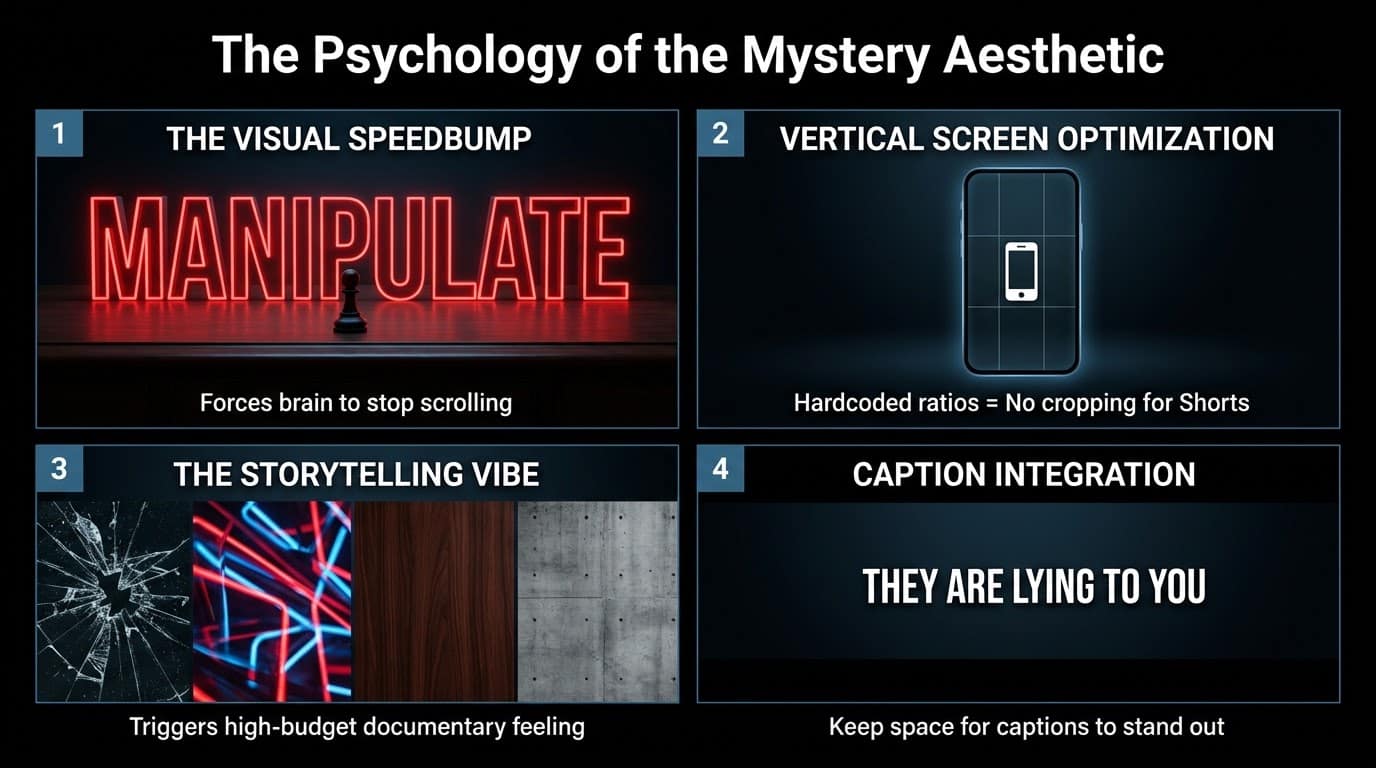
When viewers are binge-scrolling, their brains process imagery in a fraction of a second. True crime and thriller content are incredibly popular among English-speaking audiences. Bright, cluttered images rarely fit this vibe. Here are a few observed creative principles explaining why creators use high-contrast art with a 3D text hook:
- The Visual Speedbump: Placing an aggressive, single word like “MANIPULATE” in the center of an isolated scene acts as a speedbump. It forces the brain to quickly read the word, giving your opening audio a better chance to capture attention.
- Vertical Screen Optimization: By hardcoding the aspect ratio into your prompts, you tell the AI to generate the artwork vertically. Adhering to standard video aspect ratios ensures the image utilizes the entire smartphone display without awkward cropping.
- The Storytelling Vibe: Textures like shattered glass, neon lights, and dark mahogany trigger a psychological response associated with high-budget documentaries. It feels authentic to someone looking for hidden secrets.
- Caption Integration: I designed these concepts to maintain empty space at the top and bottom of the frame. When you add dynamic auto-captions later, your text actually stands out instead of getting lost in a messy background.
The Editing Playbook: A Common Workflow
Generating a detailed image is only the first step. Dropping a static image into your timeline and exporting it will result in a flat video. When optimizing your workflow for these AI prompts for psychology YouTube Shorts, here is a widely used post-production routine:
- The Generation Phase: Copy the text provided below exactly as written. Paste it into your AI generator. The styling and dimensions are already included.
- The Timeline Drop: Import the downloaded files into your preferred editing software.
- The 1.5-Second Rule: Trim this 3D text graphic so it acts strictly as an opening title hook. Video editors generally keep these cards on screen for roughly 1.5 – 2 seconds, timing them perfectly with the first spoken sentence.
- Applying Subtle Motion: A completely still image can feel dead. Apply a very slow zoom effect (scaling from 100% to 104%) over the duration of the clip.
- Heavy Sound Design: Audio is critical here. Try layering a heavy “bass drop” or a tension-building riser underneath the voiceover. Keep background ambient music low. Cut immediately to moving B-roll or dynamic captions once the initial hook ends.
Quick Breakdown: 5 Behavioral Psychology Concepts
Different scripts require different contexts. Here is a quick reference table for the five structures provided below to help you plan your content schedule:
| Style Name & Hook Text | Visual Elements | General Topic Alignment |
|---|---|---|
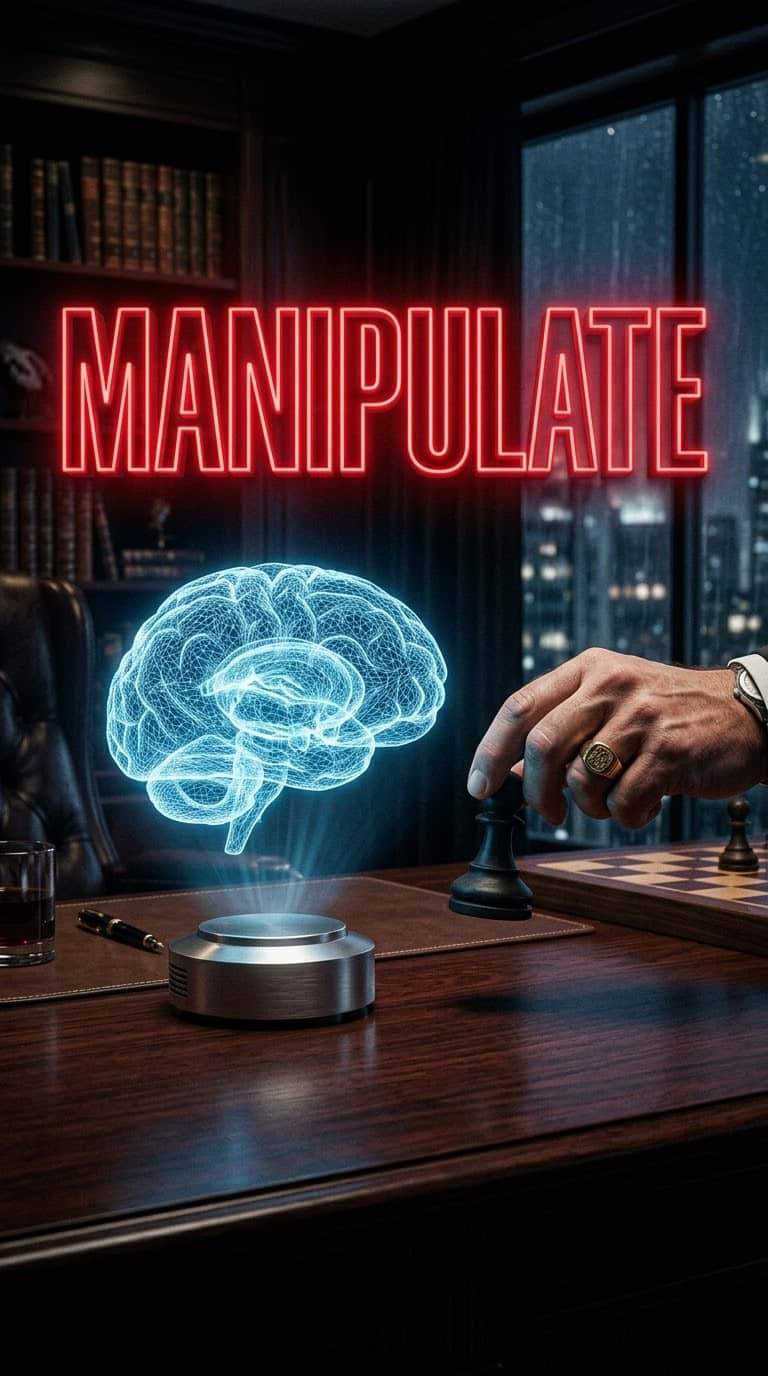
| 1. Executive Hologram (“MANIPULATE”) | Dark desk, glowing brain, chess piece | Power dynamics, control, human behavior |
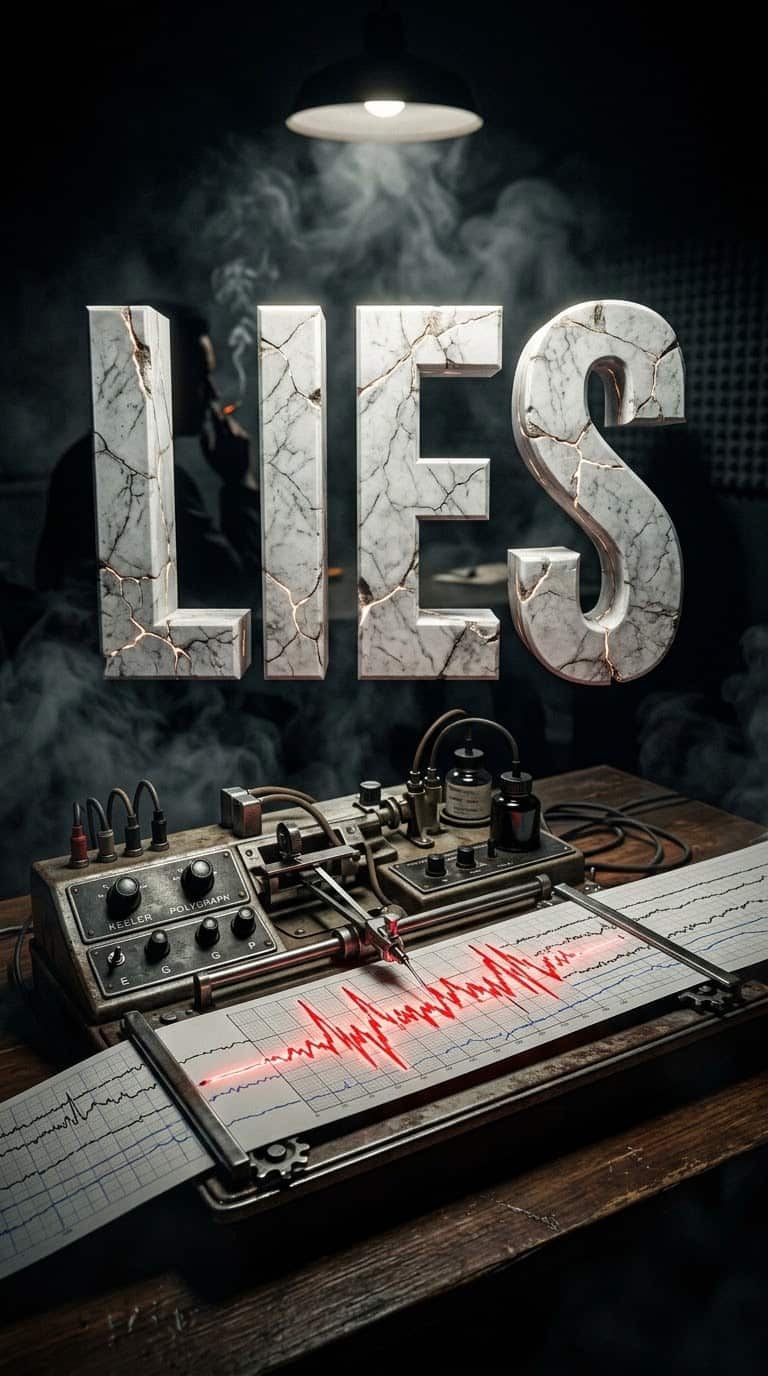
| 2. The Lie Detector (“LIES”) | Vintage polygraph, red ink, smoke | Deception, body language, deep facts |
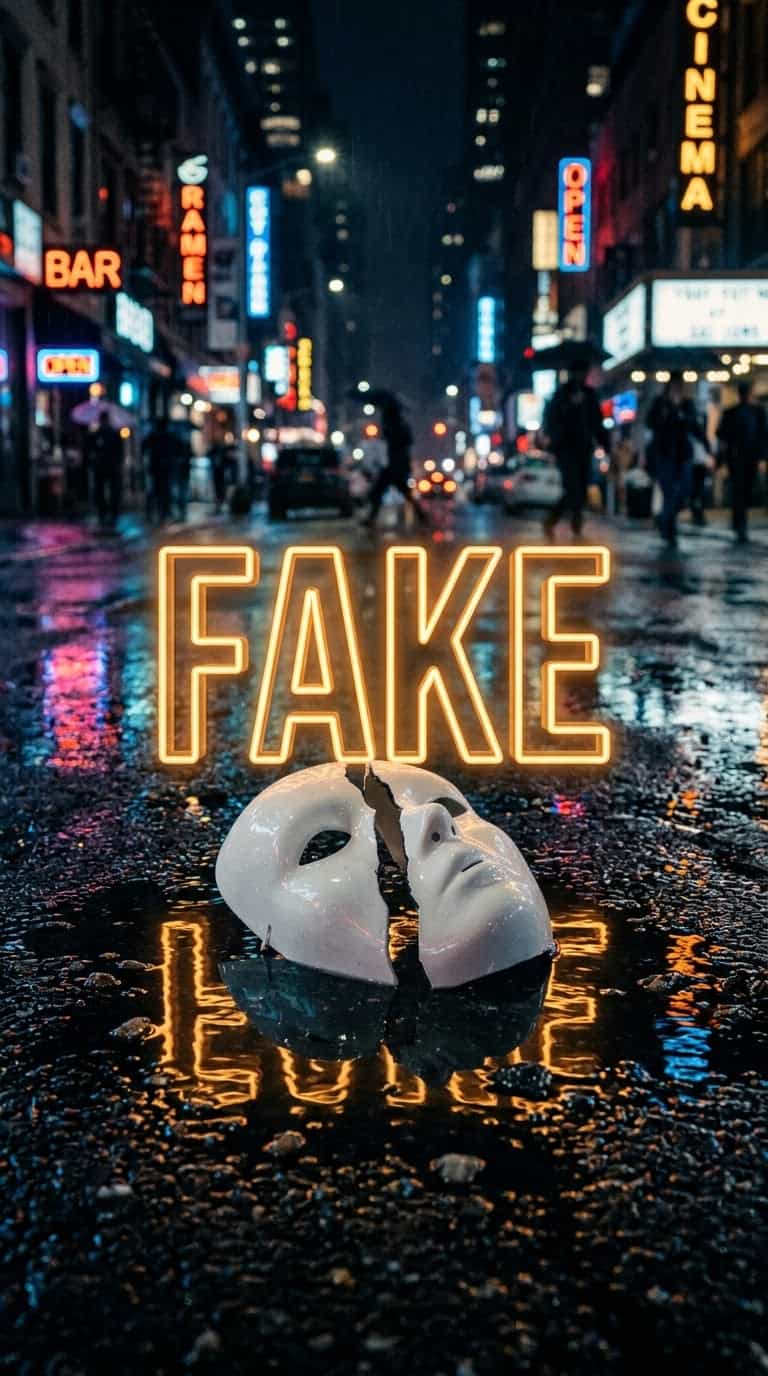
| 3. The Broken Mask (“FAKE”) | Porcelain mask, wet asphalt, neon | Fake personalities, trust, behavioral traits |
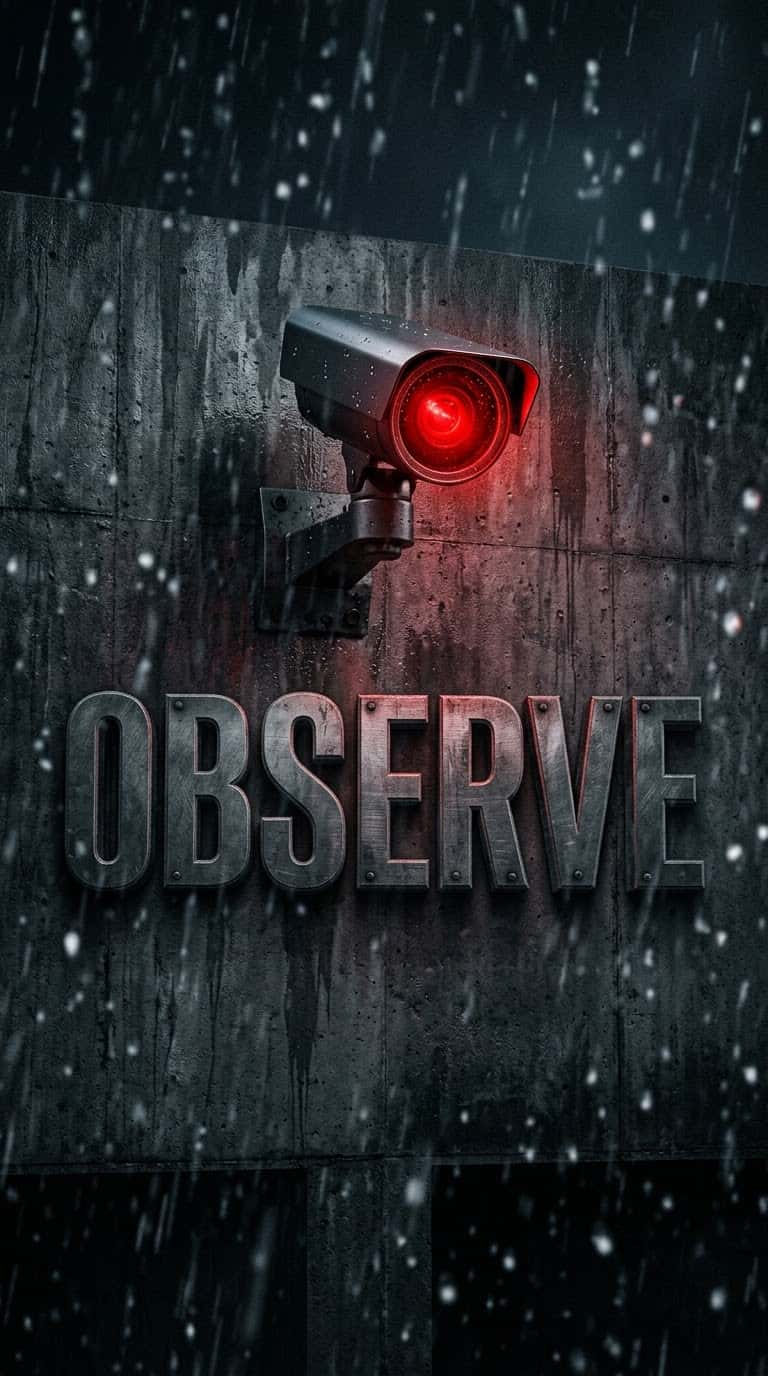
| 4. Paranoia Lens (“OBSERVE”) | Security camera, red lens, concrete | Surveillance, social engineering, awareness |
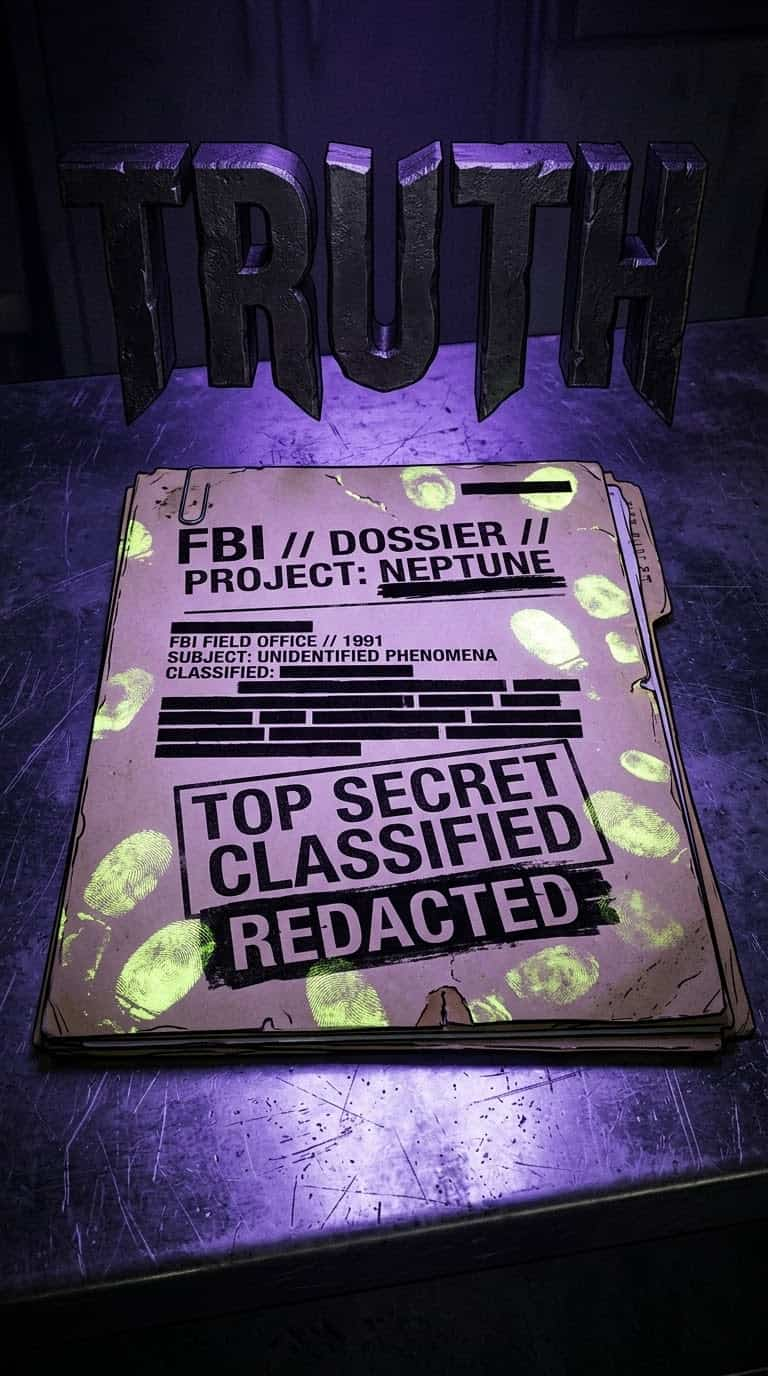
| 5. Classified Vault (“TRUTH”) | Redacted files, UV light, stainless steel | Mystery topics, hidden history, secrets |
The 5 Copy-Paste AI Prompts for Psychology YouTube Shorts
The necessary styling cues and vertical sizing instructions are already at the end of each block. Copy the text, paste it into your AI generator, and generate variations until the textures look correct.
Prompt 1: The Executive Hologram (Power & Control)
For videos discussing power dynamics or social engineering, this concept creates a highly tactical atmosphere without overwhelming the viewer.
Prompt 2: The Lie Detector (Deception & Body Language)
Unlike the previous concept, this scene relies on heavy shadows and dramatic lighting to set an intense mood. It works particularly well when explaining facts about body language or deception.
Prompt 3: The Broken Mask (Fake Personalities)
A cracked porcelain mask resting on wet asphalt provides a strong metaphorical hook. If your script touches on toxic traits or hidden behavioral patterns, this imagery fits perfectly.
Prompt 4: The Paranoia Lens (Surveillance & Awareness)
Here, the focus shifts entirely to observation. The brutalist concrete background keeps distractions minimal, forcing the audience to look directly at the glowing security camera lens.
Prompt 5: The Classified Vault (Hidden Secrets)
Closing out the list is a classic thriller setup. Redacted documents and UV lighting immediately signal that the video is about to reveal something hidden.
3 Common Errors to Avoid
When experimenting with analytical content, creators often run into a few execution issues that may negatively affect viewer retention.
1. Static Lingering: The examples provided are meant to act as visual hooks. Leaving a static image of a lie detector on the screen for a full 60-second video leads to viewer drop-off. Cut to moving B-roll quickly.
2. Clashing Auto-Captions: If your AI image has the word “LIES” baked into the center of the frame, be careful with your editing software. Allowing generated captions to overlap directly over the 3D typography creates visual clutter. Always position moving text in the lower third.
3. Using Weak Audio: The visuals can look fantastic, but if your voiceover sounds like a cheerful corporate robot, it reduces engagement. The behavioral psychology niche typically requires serious and slightly mysterious voices. Using higher-quality AI voice generation tools is standard practice.
FAQs: AI Generators and Psychology Content
1. Why is the mystery aesthetic often used for deep facts?
The moody style mimics popular thriller documentaries. It immediately signals to the viewer that they are about to hear serious, analytical content.
2. Can AI generators actually spell short words correctly?
Text rendering has improved a lot lately. You’ll have the best luck with short, 4-to-6 letter words like “FAKE” or “TRUTH”. Still, expect to run a few generations before getting a clean spelling.
3. Are these types of faceless channels monetizable?
Yes, but you have to follow standard YouTube Partner Program policies. To avoid “reused content” flags, make sure you add real creative value:
- Write original, engaging scripts.
- Use high-quality audio.
- Apply dynamic editing and sound design.
4. Which specific AI tool handles cinematic lighting the best?
During my testing, Google’s Nano Banana 2 handled the lighting setups in these examples beautifully. You might prefer a different platform depending on your exact visual goals.
5. Do I need to pay for an AI subscription to start?
Not necessarily. Several platforms offer free daily credits to get you started.
Final Thoughts
If you end up testing these prompts, don’t stop after the first generation. Small wording changes often produce surprisingly different results, so it’s worth experimenting until you find a style that fits your channel.
Disclaimer: The information provided in this article is for educational and informational purposes only. YouTube’s algorithms, monetization policies, and AI generation tools change frequently. We do not guarantee any specific results, views, or earnings from using the prompts or workflows discussed above. Always review YouTube’s official community guidelines and the terms of service of any AI platform you choose to use.

About the Author
Hey, I’m Dharmendra Singh. I started AITool555 in early 2026 to share AI prompts that actually work.
I personally test every Midjourney, ChatGPT, and Leonardo AI prompt I publish. If it doesn’t save me time or give real results, it doesn’t make it onto this site. No fluff, just prompts I use for my own projects.
Questions? Email me: [email protected]
1 thought on “5 Deep AI Prompts for Psychology YouTube Shorts (9:16)”