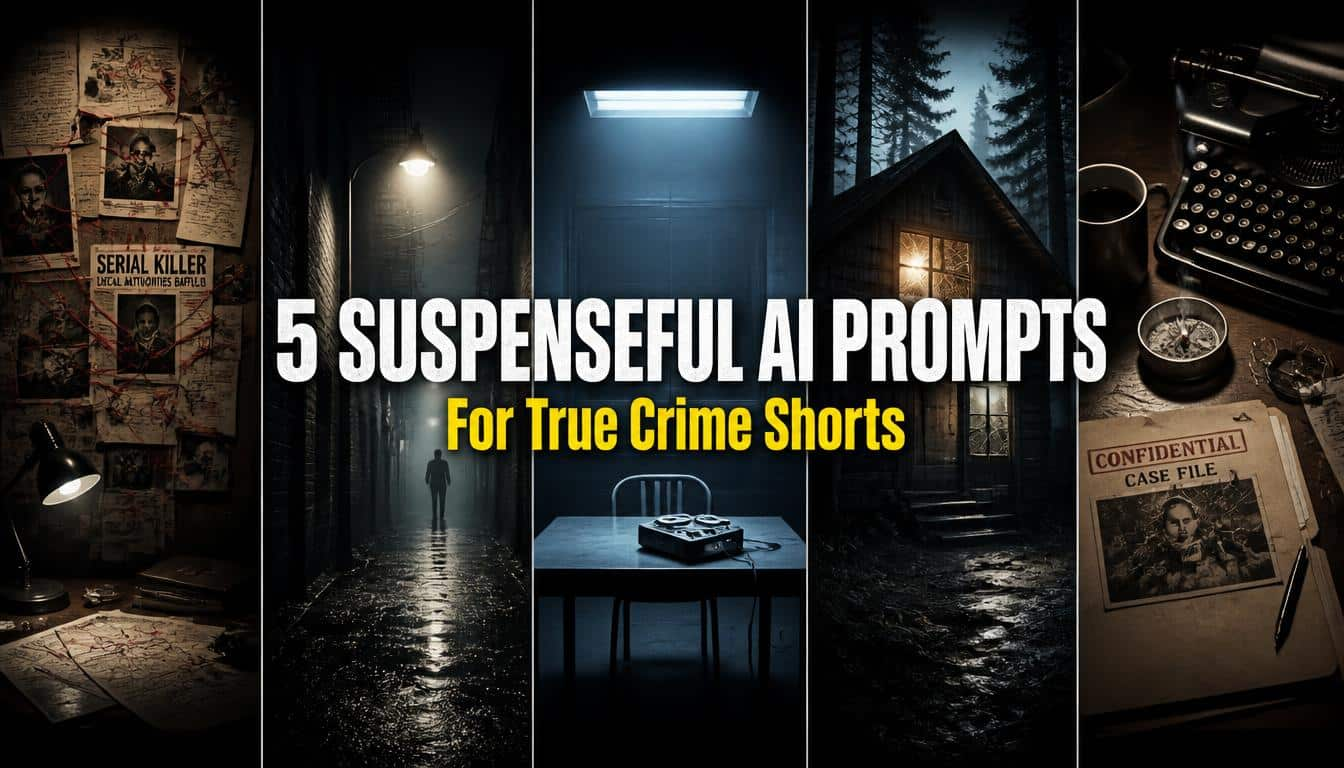
Quick Answer: To create high-retention faceless videos about unsolved mysteries without the depiction of graphic imagery, consider using AI prompts for true crime shorts that generate 9:16 vertical images of empty interrogation rooms, detective desks, and neon-lit alleyways using Leonardo AI’s cinematic style, combined with moody, low-key lighting to maximize viewer curiosity.
AI prompts for true crime shorts are specialized cinematic text instructions used in generators like Leonardo AI to create moody, suspenseful, and atmospheric vertical backgrounds—such as evidence boards and foggy alleyways—designed specifically for faceless unsolved mystery, true crime stories, and investigative visual metaphors for YouTube Shorts.
If you are managing a faceless mystery or true crime YouTube channel in 2026, you already know that building suspense is the key to holding viewer attention. Many U.S. viewers are fascinated by cold cases, detective stories, and criminal behavior. However, true crime content requires careful handling because graphic violence, shocking imagery, and exploitative coverage of sensitive events can affect advertiser suitability. To elevate your production value and create a more compelling viewing experience safely, mastering these specific cinematic crime visuals is a critical step in building a sustainable, advertiser-conscious channel.
In this comprehensive guide, I am sharing five meticulously tested, copy-paste AI background prompts engineered to give your channel an immersive documentary aesthetic. We are moving away from generic imagery and focusing entirely on visual metaphors—shadows, locked doors, and glowing objects—that perfectly complement deep, analytical voiceovers.
Creating content in the faceless true crime channel prompts niche is highly popular and offers high engagement potential. By upgrading your visual strategy to these photorealistic, moody backgrounds, you establish a serious, professional brand identity, which can significantly help keep viewers engaged with your storytelling.
Why the “Noir & Suspense” Aesthetic Works for Modern Mystery
Before we dive into the exact prompts, it is helpful to understand the psychology behind this specific visual style. Why do viewers watch cold-case breakdowns featuring dark rooms, evidence boards, and mysterious locations?
- Policy-Safer Psychological Tension: Focusing on showing the environment of a mystery (like an empty cabin or an interrogation room) rather than graphic violence creates powerful visual tension while taking a more advertiser-conscious approach to visual presentation.
- The “Investigative” Experience: Showcasing red strings on evidence boards, glowing tape recorders, and manila folders provides an excellent backdrop for storytelling. Viewers feel more intellectually engaged when the visuals support the factual narrative of the case.
- Reducing Visual Clutter: A dark, heavily shadowed background reduces modern visual distractions, allowing the viewer to focus entirely on your on-screen captions and the gravity of your storytelling.
My Exact Leonardo AI Settings & Generation Costs
To generate the atmospheric result images you see in this guide, I personally tested all of these prompts using Leonardo AI. For the best results tailored to vertical video formats, here is the exact configuration I used:
- AI Generator: Leonardo AI
- Model: Auto
- Style: Cinematic
- Dimensions (Aspect Ratio): 9:16 (Vertical)
Credit Usage & Free Tier Breakdown:
Leonardo AI’s token cost varies depending on the selected model, quality settings, and computational intensity of the generation requirements. The current free plan provides 150 Fast Tokens per day, but the number of images you can generate will vary. If you are testing all five prompts from this guide, always check the specific token cost shown in the Leonardo AI interface before generating, as different model and style combinations require different credit costs.
(Note on Pricing: AI platforms update their features and pricing constantly. The generous daily Fast Tokens information mentioned above is based on my personal testing in August 2026. These free limits and credit costs are entirely determined by Leonardo AI and are subject to change without notice in the future.)
Quick Breakdown: The 5 True Crime Visual Styles
| Visual Style & Atmosphere | Overall Vibe | Best Used For These Channel Topics |
|---|---|---|
| 1. The Evidence Board | Analytical, chaotic, deep | Complex cold cases, multiple suspects, timelines |
| 2. The Foggy Alleyway | Dangerous, isolated, chilling | Urban legends, stalker stories, disappearances |
| 3. The Interrogation Room | Tense, psychological, cold | Criminal confessions, psychology breakdowns |
| 4. The Abandoned Cabin | Creepy, remote, unsettling | Woods disappearances, remote crime scenes |
| 5. The Detective’s Desk | Classic, focused, intellectual | Historical crimes, logic puzzles, facts |
The 5 Copy-Paste AI Prompts for True Crime Shorts
To avoid creating a low-value, generic listicle, we are breaking down exactly how to use, edit, and optimize each of these cinematic environments. Copy the text inside the boxes below and paste it directly into Leonardo AI.
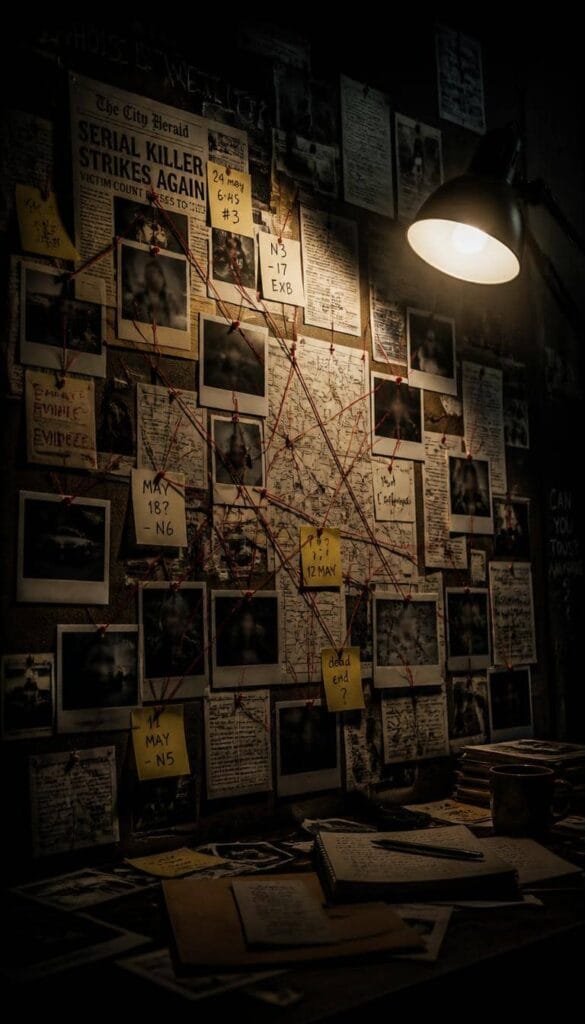
Prompt 1: The Evidence Board
What this prompt is designed for:
- Videos detailing complex, unsolved cold cases
- Stories that involve multiple suspects or timelines
- High-tension, analytical storytelling
Best AI Model Setup:
- Leonardo AI (Model: Auto | Style: Cinematic)
The Prompt:
Why it works:
- Visual Tone: The red strings and blurred photos instantly communicate that a complex investigation is underway, hooking the viewer’s curiosity.
Recommended editing:
- Apply a slow, subtle “camera pan” effect in your editing software to make it feel like the viewer is scanning the board for clues.
Common mistakes:
- Cluttered text: The background is already busy. Ensure your captions have a solid black or dark grey background box so they remain easily readable against the red strings.
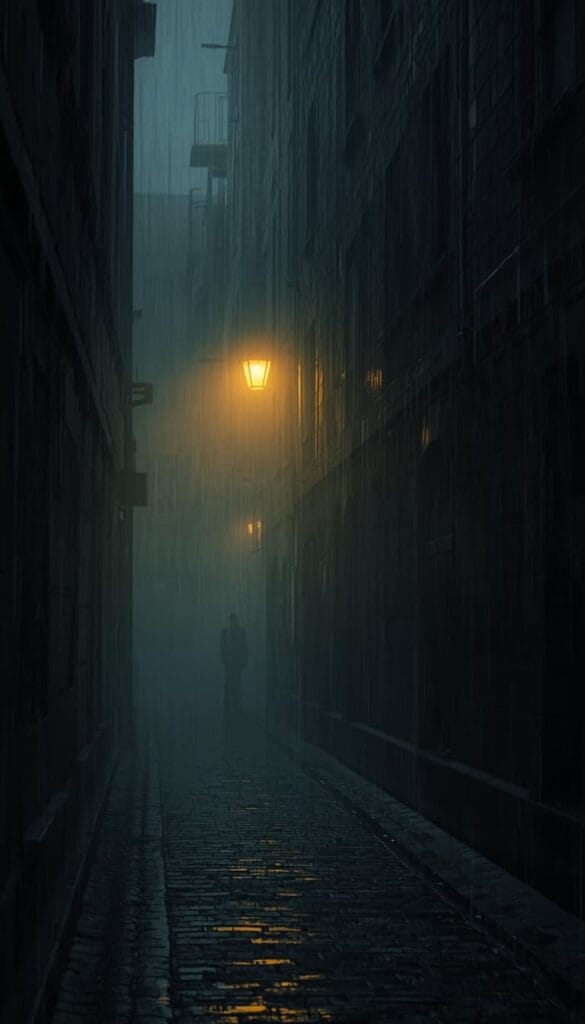
Prompt 2: The Foggy Alleyway
What this prompt is designed for:
- Stories about mysterious disappearances
- Urban legends and chilling nighttime encounters
- Neo-noir and thriller aesthetics
Best AI Model Setup:
- Leonardo AI (Model: Auto | Style: Cinematic)
The Prompt:
Why it works:
- Psychological Tension: The distant silhouette and thick fog can create a feeling of creeping anxiety, which helps keep viewers hooked until the end of the video.
Recommended editing:
- Layer a high-quality “heavy rain and distant thunder” sound effect beneath your voiceover to maximize the atmospheric depth.
Common mistakes:
- Brightening the shadows: Leave the dark areas pitch black. Brightening the image can introduce digital noise and destroy the spooky atmosphere.
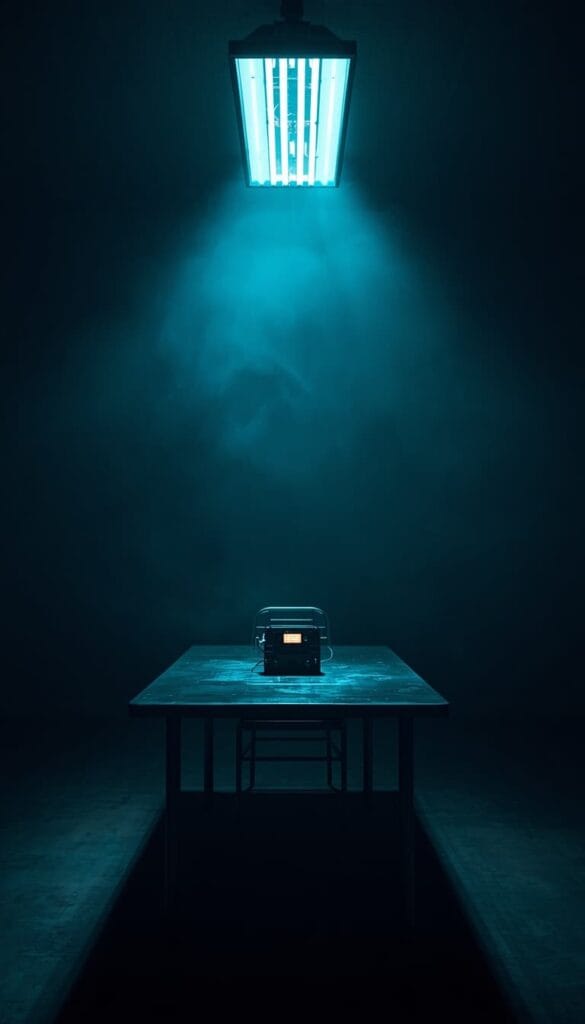
Prompt 3: The Interrogation Room
What this prompt is designed for:
- Psychological breakdowns of criminal behavior
- Videos detailing chilling confessions or interviews
- Cold, clinical storytelling aesthetics
Best AI Model Setup:
- Leonardo AI (Model: Auto | Style: Cinematic)
The Prompt:
Why it works:
- Implied Narrative: The empty chair and running tape recorder imply that a crucial police interview is about to take place, making it a perfect backdrop for narrating interrogation notes.
Recommended editing:
- Use a slight VHS or film-grain overlay in your editing software to give the video a raw, “found footage” documentary feel.
Common mistakes:
- Using cheerful fonts: Match the cold, analytical room with a stark, serious font like Courier New or a basic, bold sans-serif.
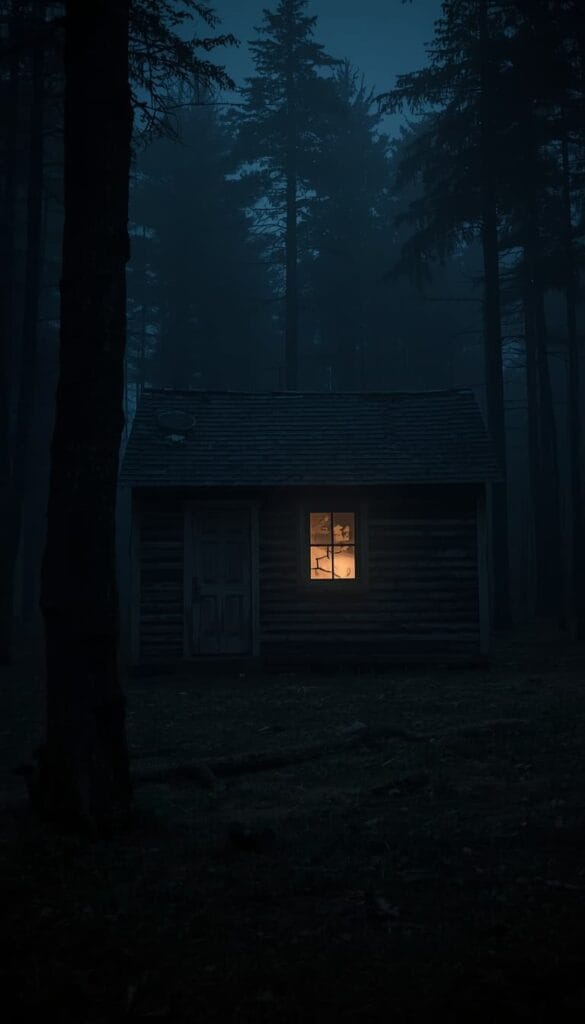
Prompt 4: The Abandoned Cabin
What this prompt is designed for:
- Stories about people vanishing in remote locations
- Paranormal mysteries and rural crime scenes
- Creepy, unsettling environmental aesthetics
Best AI Model Setup:
- Leonardo AI (Model: Auto | Style: Cinematic)
The Prompt:
Why it works:
- The Discovery Hook: Hidden cabins represent undiscovered secrets. The key visual focus of this mystery Shorts background creates an immediate question in the viewer’s mind, securing early retention.
Recommended editing:
- Add a very slow, continuous push-in zoom effect. Pair this with a low, rumbling bass sound effect to build anxiety.
Common mistakes:
- Obscuring the window: Ensure your captions do not cover the glowing window, as it is the key focal point of the image.
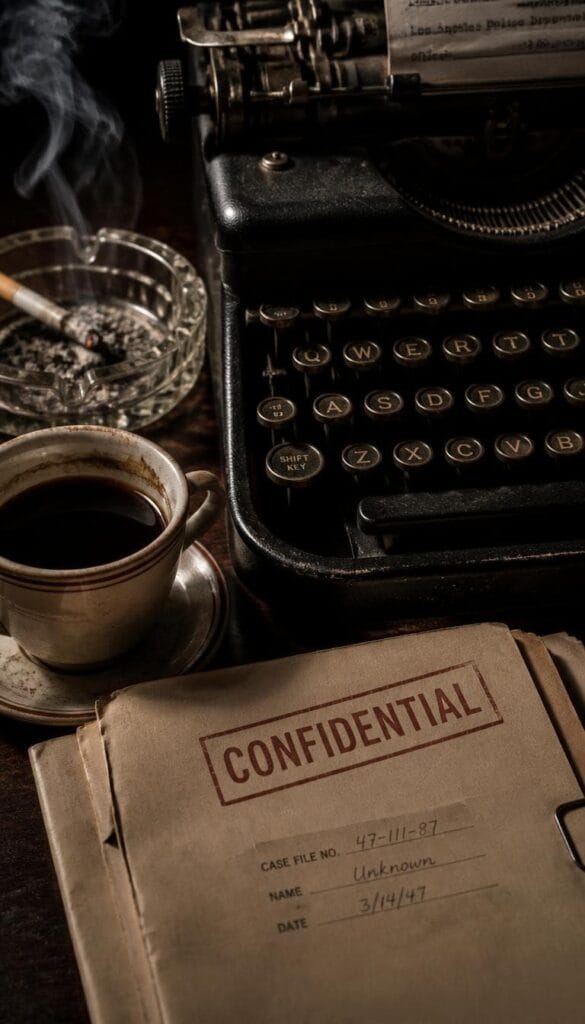
Prompt 5: The Detective’s Desk
What this prompt is designed for:
- Reading classified case files or investigation notes
- Historical or 1980s true crime stories
- Focused, detail-oriented storytelling
Best AI Model Setup:
- Leonardo AI (Model: Auto | Style: Cinematic)
The Prompt:
Why it works:
- Intellectual Focus: The classic noir elements (desk, coffee, confidential files) provide an intellectual backdrop that can help establish channel authority when presenting case facts.
Recommended editing:
- Use a typewriter text animation for your captions, accompanied by literal typewriter sound effects for each letter to create an immersive loop.
Common mistakes:
- Too much movement: Let the image stay relatively static while reading the facts. Over-animating ruins the intellectual atmosphere.
The High-End Video Editing Workflow
Generating atmospheric AI backgrounds is only the first step. Strong editing can make these visuals more effective by improving pacing, readability, and viewer immersion. Here is the workflow often used by top mystery channels using tools like Premiere Pro or Canva:
1. The Cinematic Color Grade
True crime aesthetics require a controlled color palette. Consider dropping the overall saturation by 10-15% and applying a subtle blue or teal tint to give the visual a moody, cold, and thrilling appearance.
2. The Continuous Slow Push-In
Relying solely on static images can make it harder to maintain visual engagement. Consider applying a very slow, continuous zoom effect (often called the Ken Burns effect). Start the image scale at 100% and have it slowly push in to roughly 105% by the end of the clip. This subtle movement creates a sense of motion and keeps the video feeling dynamic.
3. Professional Typography
For a mystery channel, your typography should feel clinical, investigative, or archival. Consider fonts such as Courier New or Special Elite for a documentary feel, or restrained sans-serif fonts such as Montserrat or Helvetica Neue when maximum mobile readability is the priority. Keep the text concise, centered, and colored in crisp white or cautionary yellow.
Before Publishing Checklist (The Safe Area Rule)
Before you upload your Short, run your edited video through this quality control checklist to help maximize your content’s potential:
- The UI Safe Area Test: Are your captions blocking the right side of the screen? Remember, YouTube’s UI elements (Like, Subscribe, Comments buttons) overlay parts of the bottom and right edges of the screen. Keep all critical text centered in the upper or middle parts of the frame.
- Mobile Readability: Export a frame of your video and view it on your phone. If you have to squint to read the text against foggy alleys, add a darker shadow behind your font.
- Policy Compliance Test: Ensure your visuals focus on atmospheric tension and investigative visual metaphors rather than depicting graphic violence or gore. This approach helps reduce the risk of ad-suitability issues.
Frequently Asked Questions (FAQs)
1. Which AI generator is best for these true crime images?
As outlined in the settings section above, Leonardo AI is exceptionally strong for this specific aesthetic. Using the Auto model combined with the Cinematic style can help ensure highly accurate lighting, deep shadows, and realistic textures, while helping to reduce plastic-looking artifacts vital for this genre.
2. Are AI-generated images safe for true crime YouTube monetization?
Generally, yes, but context is key. YouTube’s current monetization policies do not blanket-ban AI images; however, your overall video must create unique educational or entertainment value through your script, voiceover, and editing. Avoid mass-produced or low-value image slideshows as they can be flagged. True crime content deals with sensitive topics, so always avoid creating overly graphic, violent, or gory imagery. Additionally, YouTube states that disclosure itself does not limit a video’s audience or automatically affect its eligibility to earn money; however, they may require you to disclose when realistic scenes are generated with AI using their built-in labels. Use the atmospheric, empty-room prompts provided in this guide as they are a safer approach.
3. Will AI refuse to generate crime-related images?
Most mainstream AI generators, including Leonardo AI and Midjourney, have strict safety filters that block requests for gore, violence, or harm. This is why the prompts in this guide focus entirely on the aesthetic of mystery (like desks, cabins, and fog) rather than criminal acts, ensuring your prompts pass safety filters smoothly.
4. What aspect ratio is required for YouTube Shorts?
YouTube Shorts require a vertical aspect ratio. A format such as 1080×1920 is ideal. All the AI prompts provided in this guide include the --ar 9:16 parameter to help ensure the generated images fit mobile screens smoothly.
5. Can I use Midjourney instead of Leonardo AI?
Yes, these text prompts will also yield excellent results in Midjourney. However, many creators prefer Leonardo AI for starting out because its native free tier makes it incredibly cost-effective for daily content creation, while still providing top-tier cinematic quality.
Explore Our Shorts Prompts Cluster
This article expands our growing series on building faceless YouTube channels. If you want to expand your visual library and experiment with different high-end aesthetics, build topical authority by checking out the other guides in our exclusive series:
- 5 Luxury AI Prompts with an Old Money Aesthetic for Shorts
- 5 Luxury AI Prompts for Finance Shorts (Penthouse Aesthetic)
- 5 Dark Academia AI Prompts for Stoic Shorts (Cinematic Vibes)
- 5 Luxury AI Prompts for Supercar Shorts (POV Aesthetic)
- 5 Deep AI Prompts for Psychology Shorts (Dark Aesthetic)
- 5 Premium AI Prompts for History Shorts (Ancient Aesthetic)
Important Disclaimer
The information, strategies, and prompts provided in this article are for educational and informational purposes only. We do not guarantee any specific results, view counts, subscriber growth, financial returns, or approval into the YouTube Partner Program. Platform algorithms and monetization policies change frequently and are completely outside of our control. Building a successful faceless channel requires consistent hard work, high-quality scriptwriting, and valuable editing. Always make sure to review YouTube’s official policies regarding AI content, advertiser-friendly guidelines, and disclosure requirements.
Conclusion
Succeeding in the faceless mystery channel niche is all about capturing the viewer’s curiosity and presenting an environment that feels tense, intellectual, and thoughtfully produced without relying on policy-breaking imagery. By utilizing these carefully crafted AI prompts for true crime shorts, you immediately elevate your brand’s visual identity. The noir aesthetic helps create an atmosphere of authority and suspense. Take these copy-paste prompts, apply the recommended editing techniques, and use them to build a highly engaging and visually stunning channel.

About the Author
Hey, I’m Dharmendra Singh. I started AITool555 in early 2026 to share AI prompts that actually work.
I personally test every Midjourney, ChatGPT, and Leonardo AI prompt I publish. If it doesn’t save me time or give real results, it doesn’t make it onto this site. No fluff, just prompts I use for my own projects.
Questions? Email me: [email protected]