If you are building a faceless true crime YouTube channel, you already know that establishing a suspenseful atmosphere is the most critical part of your video. True crime audiences are often highly engaged and detail-oriented, and many viewers quickly swipe away if the production feels cheap or thrown together with generic stock footage. To actually capture an American audience’s attention and keep them invested in your mystery, you need high-end, cinematic visuals that stop the scroll immediately. If you are looking for the absolute best AI prompts for true crime YouTube Shorts, you are in the exact right place. These cinematic true crime AI prompts are designed specifically for faceless YouTube Shorts creators who want darker, more professional visuals without relying on generic stock footage.
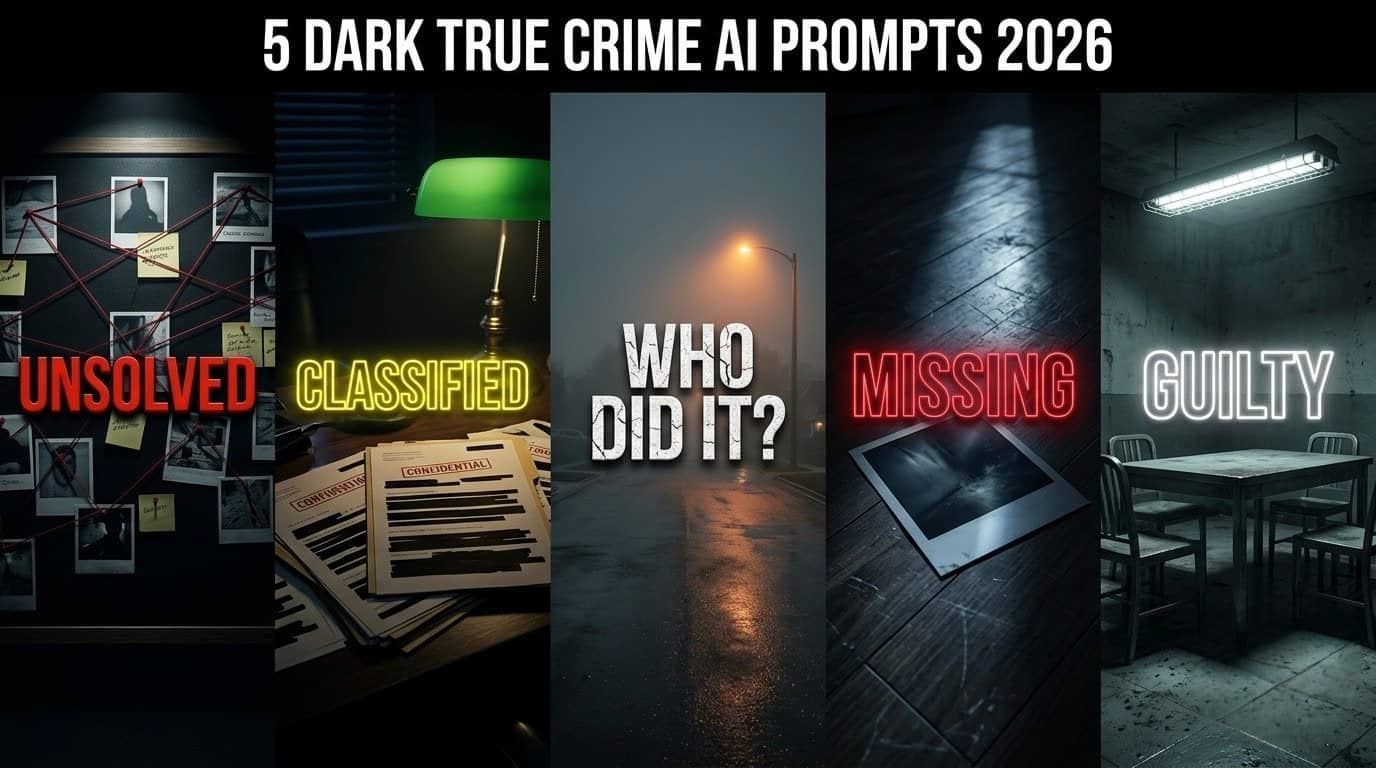
In this comprehensive guide, I am sharing five fully tested, copy-paste AI background prompts designed specifically for mystery and true crime content. These are not your average image prompts; they feature bold, 3D text hooks natively built into the artwork—from creepy evidence boards to classified detective files. You can drop these into Leonardo AI or Midjourney to create premium, scroll-stopping title cards in seconds, giving your channel a high-budget documentary feel.
Let’s talk about the reality of the short-form true crime space right now. The competition is incredibly intense. You might have the most fascinating script about an unsolved disappearance and a perfectly paced voiceover, but if your opening frame does not create instant intrigue, nobody is going to stick around to hear the story. Retention is everything on YouTube Shorts, and retention starts with the visual mood of your very first frame.
Why Text-Hook Backgrounds Dominate True Crime Shorts
When creating a faceless true crime channel, your biggest challenge is making the audience feel like they are actively participating in an investigation. A basic picture of a police car is boring. A cinematic, moody detective’s desk with the word “CLASSIFIED” glowing in the shadows is intriguing. Here is why upgrading your strategy to include 3D typography changes everything for your channel metrics:
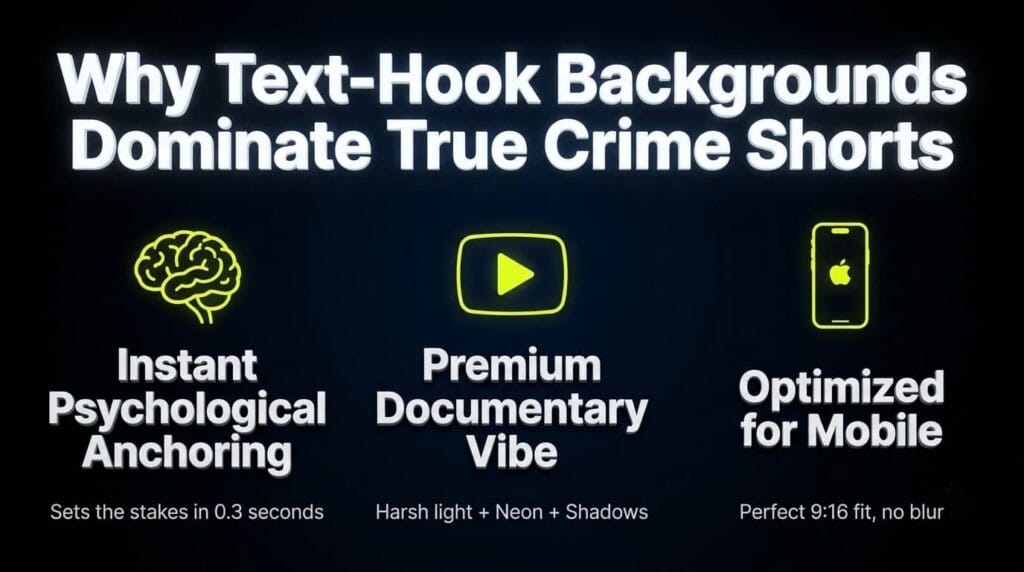
- Instant Psychological Anchoring: A clean, aggressive 3D text hook gives the brain a specific question to focus on before the thumb can swipe away. It sets the stakes immediately.
- The Premium Documentary Vibe: Our true crime shorts prompts use specific lighting cues (like harsh spotlights, neon signs, and dark shadows) to trick the viewer’s brain into thinking they are watching a high-budget Netflix original series.
- Optimized for Mobile: By including the
--ar 9:16tag, we ensure these dark AI backgrounds perfectly fill an iPhone screen in crisp resolution, avoiding the awkward blurring that happens when you manually stretch horizontal images.
Quick Breakdown: The 5 True Crime Title Cards
Before we get to the copy-paste codes, here is a quick overview of the visual styles we are building today and exactly what type of mystery topics they fit best.
| Visual Style & Hook Text | Atmosphere & Vibe | Best Used For These Topics |
|---|---|---|
| 1. The Evidence Board (“UNSOLVED”) | Chaotic, obsessive, red strings | Cold cases, serial investigations, complex plots |
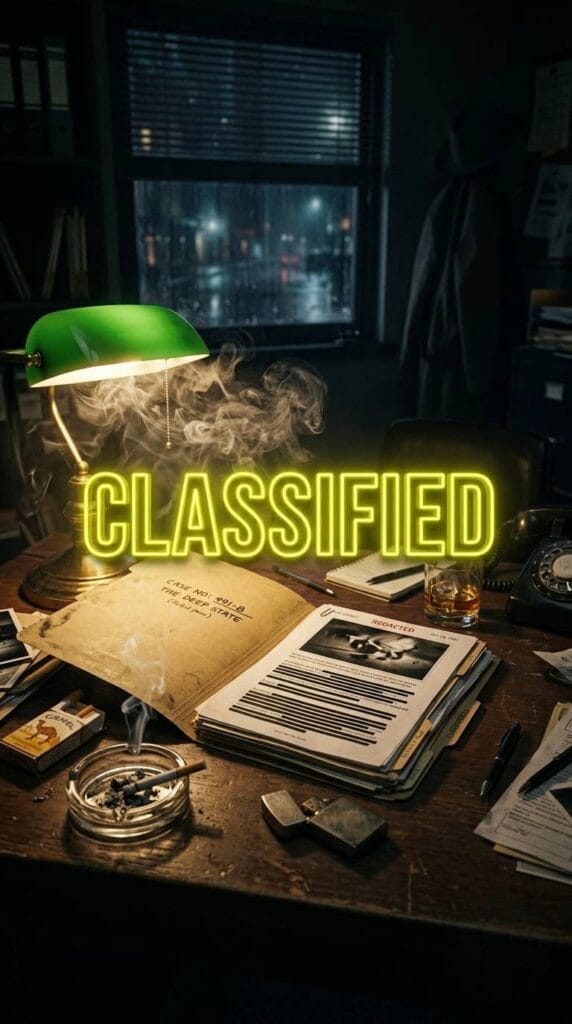
| 2. The Detective’s Desk (“CLASSIFIED”) | Dark, confidential, official | Government cover-ups, FBI files, hidden truths |
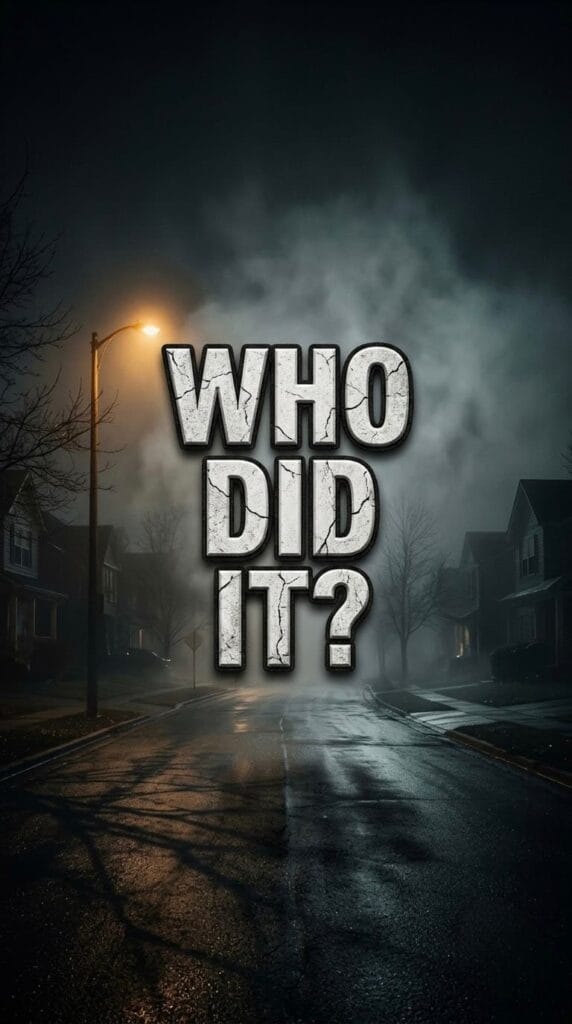
| 3. The Foggy Street (“WHO DID IT?”) | Creepy, isolated, midnight | Disappearances, nighttime events, stalker stories |
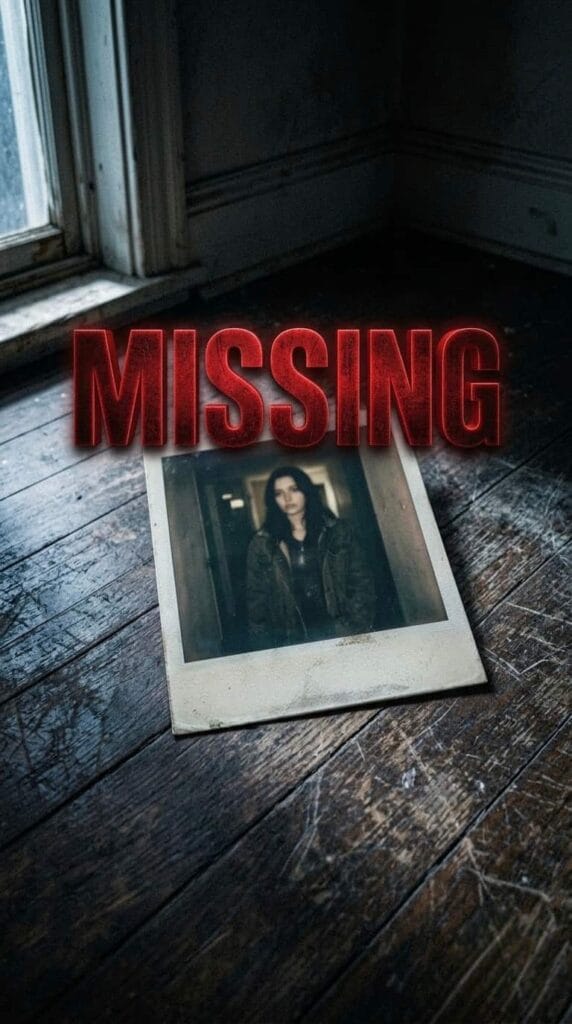
| 4. The Abandoned Polaroid (“MISSING”) | Nostalgic, eerie, personal | Missing persons, 1980s/90s cases, family mysteries |
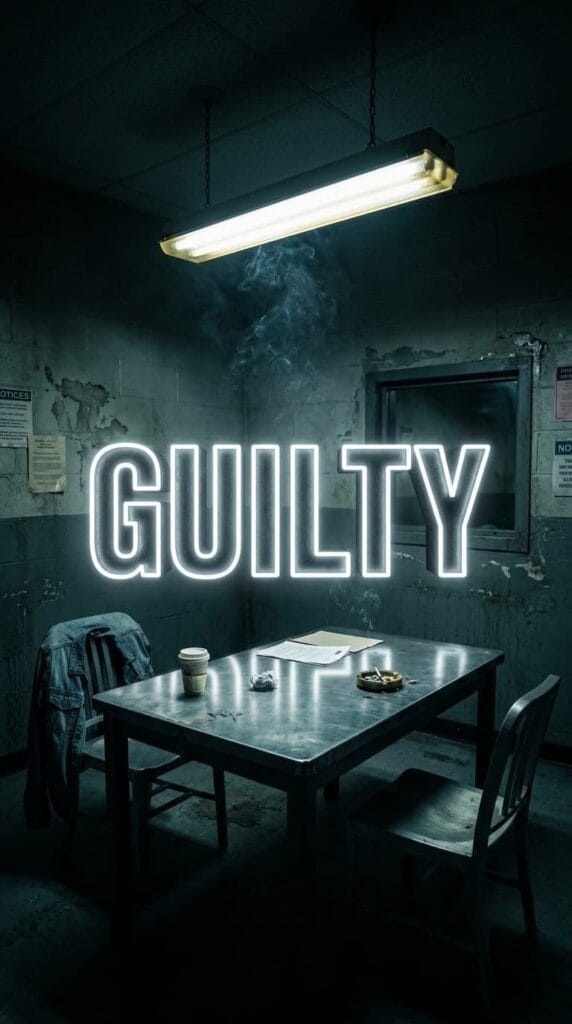
| 5. The Interrogation Room (“GUILTY”) | Tense, harsh lighting, psychological | Courtroom drama, confessions, catching the suspect |
The 5 Copy-Paste True Crime AI Prompts
I have already configured the crucial --ar 9:16 aspect ratio tag at the end of every single prompt below. This ensures your output is immediately ready for vertical video formatting. Just copy the text inside the boxes and paste it directly into your preferred image generator.
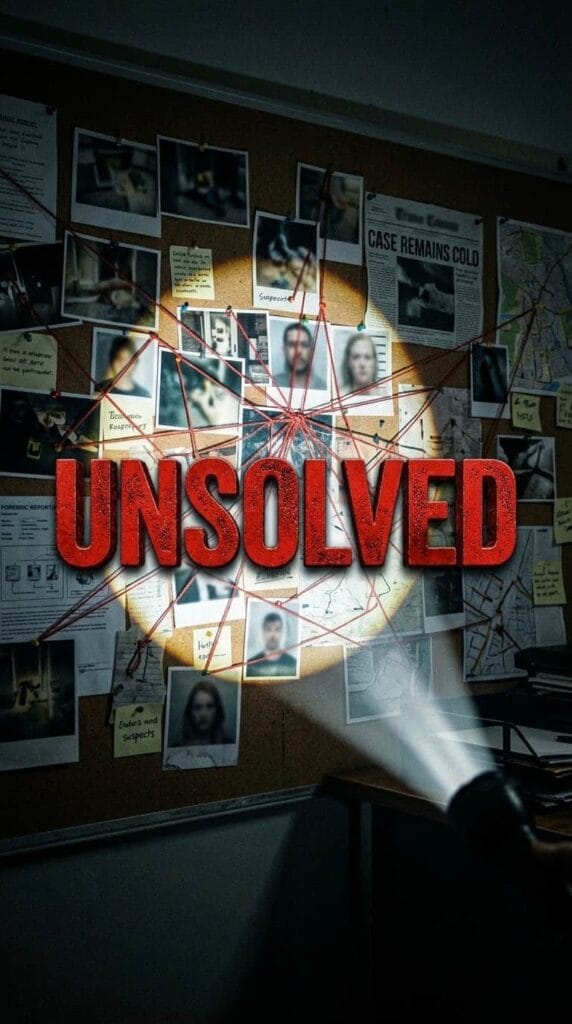
Prompt 1: The Evidence Board (Topic: Cold Cases)
If you are telling stories about complex investigations that took years to figure out, this visual sets the perfect tone. The chaotic evidence board creates an immediate sense of mystery, while the bold text hook makes the viewer stop to see what piece of the puzzle is missing.
Prompt 2: The Detective’s Desk (Topic: FBI Files & Secrets)
True crime is full of redacted documents, secret alliances, and hidden evidence. This prompt places your audience right behind a detective’s desk late at night. It is highly effective for scripts covering official cover-ups, leaked documents, or high-profile scandals.
Prompt 3: The Foggy Street (Topic: Midnight Disappearances)
Nothing represents a thriller quite like an empty street at night. This isolated, eerie environment commands attention. Use this background when your script talks about mysterious disappearances, stalkers, or events that happened in the dead of night.
Prompt 4: The Abandoned Polaroid (Topic: Missing Persons)
Missing person cases from the 1980s and 1990s consistently pull massive numbers on YouTube. Whether you are covering a famous local legend or an unsolved family mystery, this nostalgic, cinematic aesthetic keeps viewers hooked.
Prompt 5: The Interrogation Room (Topic: Confessions & Psychology)
If your channel focuses on the psychological breakdown of suspects, intense courtroom moments, or police interrogations, this is your go-to visual. The harsh lighting makes your content feel incredibly tense and dramatic.
How to Edit These Backgrounds for Maximum Retention
Having great mystery AI images is only the first step. To actually maintain viewer retention and get the YouTube algorithm to push your content, you need to edit these images correctly. Here is a very simple workflow you can apply in CapCut or Adobe Premiere Pro:
- The Two-Second Hook: Place your generated image at the very beginning of your timeline. Leave it on screen for exactly 1.5 to 2.5 seconds. This gives the viewer enough time to read the 3D text and register the creepy aesthetic.
- The Slow Push-In: Never leave a static image completely still. Apply a very subtle, slow “Ken Burns effect”. Have the image scale up slightly (from 100% to 105%) during those first two seconds to create a feeling of rising tension.
- Heavy Sound Design: A silent image will kill your retention instantly. Layer in sound design immediately. If you are using the “Evidence Board” prompt, add a low bass drone, a heartbeat sound, and the click of a camera shutter. Sound design makes the AI image feel terrifyingly real.
- The Hard Cut: Right after your voiceover delivers the hook line (e.g., “On October 12th, she vanished without a trace…”), cut away from this title card and switch to your dynamic B-roll, maps, or fast-paced captions.
Frequently Asked Questions (FAQs)
1. Which AI tool is best for generating text in true crime images?
As of right now, Midjourney V6 and Leonardo AI are the absolute best tools for handling typography. They understand how to integrate words seamlessly into the environment, making the text look like it actually exists inside the interrogation room or on the evidence board.
2. Will YouTube demonetize true crime shorts?
True crime can be monetized if you follow YouTube’s Advertiser-Friendly Content Guidelines. Avoid showing graphic violence, excessive gore, or highly disturbing imagery. Our AI prompts are designed to be suspenseful and atmospheric, not violently graphic, which keeps your content much safer for monetization.
3. Can I use real names of victims in the AI prompts?
While you can tell true stories in your voiceover, it is usually better to use broad hook words (like “MISSING” or “CLASSIFIED”) in the visual background rather than generating real names. This keeps your title cards versatile and avoids any ethical or policy issues with the AI image generators.
4. Do I need to add my own captions over these images?
For the first two seconds while the 3D hook text is on screen, keep your auto-captions turned off or make them very small at the bottom. You do not want your editing app’s captions blocking the massive cinematic 3D text. Once you cut to your B-roll, bring the big, dynamic captions back in.
5. How many prompts should I use per video?
You only need one of these text-hook prompts per video. Use it strictly as your opening title card to stop the scroll and establish the suspense. After that, rely on standard images, zooming effects, and transitions to tell the rest of the mystery.
Explore Our Complete Shorts Background Cluster
If you run multiple faceless channels or want to experiment with different visual styles, you need to check out our entire library of niche-specific prompt guides. This completes your ultimate toolkit for YouTube retention:
- 5 Best AI Prompts for YouTube Shorts Backgrounds (9:16 Text-Based)
- 5 Premium AI Prompts for Finance YouTube Shorts
- 5 Deep AI Prompts for Psychology YouTube Shorts
- 5 High-Energy AI Prompts for Gym YouTube Shorts
- 5 Viral AI Prompts for Stoic YouTube Shorts
- 5 Premium AI Prompts for History YouTube Shorts
Important Disclaimer
The information and strategies provided in this article are for educational and informational purposes only. We do not guarantee specific view counts, subscriber growth, virality, or approval into the YouTube Partner Program. YouTube’s algorithms, community guidelines, and monetization policies change frequently and are outside of our control. Building a successful YouTube channel requires consistent effort, high-quality original scriptwriting, and respectful handling of sensitive topics. Always review YouTube’s official policies regarding AI content and true crime material.
Final Thoughts
Running a successful faceless true crime channel comes down to treating your short-form content like a high-end documentary. You are competing for attention in a highly analytical market, and generic stock photos will immediately ruin the suspense. Take these AI prompts for true crime YouTube Shorts, test them out with your specific case files, and start creating opening hooks that demand attention. By pairing these dark, atmospheric visuals with respectful storytelling and great audio, you put your channel in a much stronger position to grow.

About the Author
Hey, I’m Dharmendra Singh. I started AITool555 in early 2026 to share AI prompts that actually work.
I personally test every Midjourney, ChatGPT, and Leonardo AI prompt I publish. If it doesn’t save me time or give real results, it doesn’t make it onto this site. No fluff, just prompts I use for my own projects.
Questions? Email me: [email protected]